
Medically reviewed by KNMC Hospital Last updated: September 2026
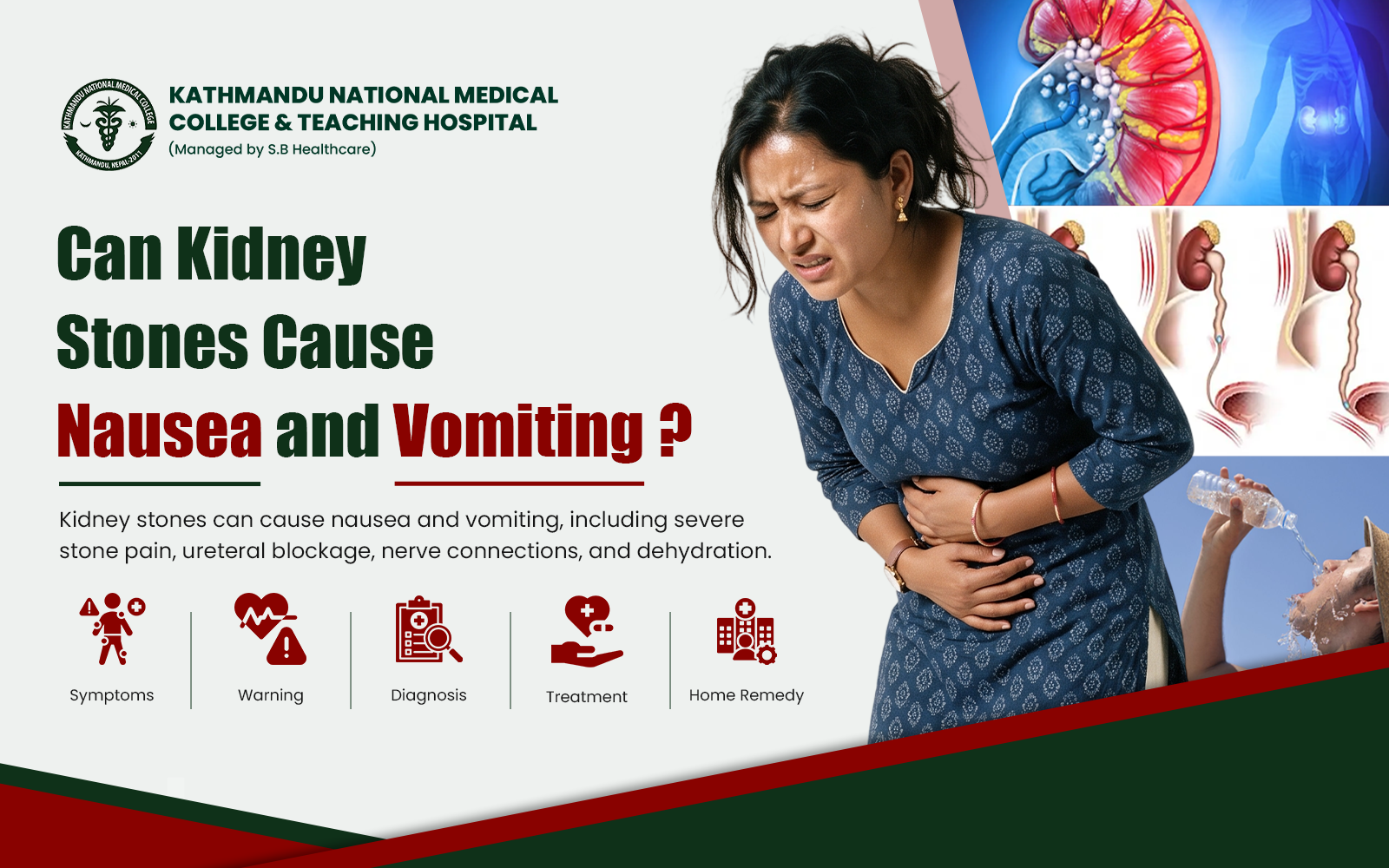
Yes. Nausea and vomiting happen in more than half of people with a classic kidney stone attack. This isn't a coincidence; it relates to how the kidneys and the gut are wired together.
Why Do Kidney Stones Cause Nausea and Vomiting?
- Shared nerve pathways: The kidneys, ureters, and gut are connected through the same nerve routes, including the vagus nerve. A stone irritating the kidney or ureter can send signals that the brain reads as a gut problem, not a urinary one.
- It's not just about pain level: Research actually shows nausea from a kidney stone isn't simply tied to how much pain you're in — other very painful conditions don't cause it the same way. The nerve connection itself is the real driver, not pain alone.
- Ureteral blockage: A stone stuck in the ureter raises pressure in the urinary tract. This pressure buildup is a major trigger for both pain and nausea together.
- Dehydration: Vomiting causes fluid loss. Feeling too sick to drink makes this worse, which can also raise the risk of forming another stone later.
What Does Kidney Stone Nausea Feel Like?
- Comes on suddenly, often together with a wave of pain
- A strong urge to vomit, or an unsettled, queasy stomach
- Loss of appetite
- Sweating or restlessness alongside the nausea
- Gets noticeably worse during the sharpest pain
What Other Symptoms Can Occur With Kidney Stones?
- Sharp pain in the side or lower back
- Pain spreading to the lower belly or groin
- Pain that comes in waves, not constant
- Burning pain while urinating
- Needing to urinate often or urgently
- Blood in the urine
- Cloudy or bad-smelling urine
- Trouble passing urine
- Restlessness from the pain
When Should You See a Doctor?
Mild nausea that settles as the pain eases usually isn't an emergency. But get medical care promptly if you have:
- Severe or non-stop pain
- Repeated vomiting, or you can't keep fluids down at all
- Fever or chills
- Trouble urinating, or can't urinate
- Blood in the urine
- Signs of significant dehydration or severe weakness
- Existing kidney disease along with these symptoms
How Are Kidney Stones Diagnosed?
Diagnosis usually combines a few simple tests:
- Urine test: Checks for blood, infection, or stone-forming substances
- Blood test: Checks kidney function and substances like calcium
- Ultrasound: First-line imaging, no radiation involved
- CT scan (non-contrast): The most detailed option for confirming size, location, and blockage
For a full breakdown of diagnosis, cost and treatment, see our main guide to kidney stone treatment in Kathmandu.
How Is Nausea and Vomiting Caused by Kidney Stones Treated?
- Pain relief first: Controlling the pain itself often eases the nausea that comes with it.
- Anti-nausea medicine: If vomiting is significant, a doctor may add a specific antiemetic medication.
- Fluids, carefully: Staying hydrated matters, but forcing large amounts of water at once doesn't make a blocked stone pass faster, and can add to the discomfort. Follow your doctor's guidance here.
- Medicine to help the stone pass: Certain medications relax the ureter for some stone types. Whether this fits your case depends on the stone and your overall health.
- Procedures, if needed: For stones that won't pass on their own or are causing ongoing problems:
- Ureteroscopy: a thin scope removes or breaks up the stone
- Laser lithotripsy: a laser breaks the stone into pieces that pass more easily
- Shock Wave Lithotripsy (SWL): sound waves break the stone from outside the body
- PCNL: used for larger or more complex stones
Full detail on kidney operation options and typical costs in Kathmandu is covered in our kidney stone treatment guide.
Does Vomiting Make Kidney Stones Worse?
No, not directly. Vomiting does not make a stone larger nor physically exacerbate a blockage. The real danger is indirect: repeated vomiting can lead to dehydration, which reduces the volume of your urine. This is more of a problem if a stone is already blocking the flow of urine or if you have some other condition affecting your kidneys.
Nausea After Kidney Stone Treatment or Surgery
This is good to know separately, as it is a common question post-procedure. Mild nausea for a day or so after ESWL, ureteroscopy or laser treatment is common. This is usually due to the effects of anaesthesia or the body adjusting to the passage of stone fragments. Usually it clears up quickly with rest and any anti-nausea medication your doctor might recommend. If you have really bad nausea that keeps getting worse, or if you have a fever, don’t assume it’s just part of the process. Tell your doctor.
How Can You Manage Nausea at Home?
- Take any prescribed medicine exactly as directed
- Sip fluids slowly instead of drinking a lot at once
- Rest, and skip strenuous activity while symptoms are bad
- Eat light, simple foods if you can manage it
- Watch for fever, worsening pain, less urination, or nausea that won't stop
How Long Does Kidney Stone Nausea Last?
It varies. Nausea often eases once the sharp pain settles or the stone shifts position. If the stone stays stuck in the ureter, though, symptoms can continue or come back. Don't assume ongoing nausea is "just part of passing a stone", persistent symptoms are worth getting checked.
Can Kidney Stones Cause Nausea Without Pain?
It's possible, but nausea by itself isn't enough to say for sure it's a kidney stone. Stones that stay inside the kidney, without moving, can cause mild symptoms or none at all. Nausea also shows up with plenty of other things, stomach bugs, food poisoning, medication side effects, gallbladder issues, and other digestive problems. If nausea doesn't have a clear cause or won't go away, it's worth getting checked rather than guessing.
Doctor for Kidney Stone Treatment in Kathmandu
Dr Jit Prakash Shrestha, Sr Consultant Endo Urologist & Minimal Invasive Surgeon at KNMC (NMC 6515), has 15+ years of clinical experience in urology, with kidney and urinary stones listed specifically among his areas of focus.
- Education: MBBS (2007), Master in Surgery – Urology (2012)
- Focus areas: Kidney and urinary stones, endourology and minimally invasive surgery, prostate conditions, urinary tract infections, bladder and kidney disorders, andrology
- Memberships: Nepal Medical Council, Nepal Medical Association, Nepal Association of Urological Surgeons
- OPD schedule: Sunday to Friday, at KNMC Hospital, Kathmandu
He has attended national and international conferences on endourology and minimally invasive stone treatment, including advanced PCNL workshops and multiple Nepal Association of Urological Surgeons conferences. Check his live OPD schedule and book an appointment.
Conclusion
Nausea and vomiting alongside a kidney stone are common, and they come from a real physical connection between the urinary system and the gut, not something separate to worry about on top of the stone itself. Controlling the underlying stone and pain is usually what resolves the nausea too. Persistent vomiting, fever, or an inability to keep fluids down are the signals that mean it's time to see a doctor rather than wait it out.
FAQs
Is it normal to feel nauseous with a kidney stone?
Yes, it's a very common part of a kidney stone attack, caused by shared nerve connections between the urinary tract and the gut, not a separate problem.
Can a kidney stone cause vomiting without much pain?
It's uncommon but possible, especially if the stone is still sitting in the kidney rather than moving through the ureter. A doctor's evaluation is the only way to confirm the cause.
What helps kidney stone nausea at home?
Small sips of fluid, rest, light food if tolerated, and taking any prescribed medicine as directed. Forcing large amounts of water at once doesn't help and can make you feel worse.
When is kidney stone nausea an emergency?
When it comes with repeated vomiting you can't control, fever, chills, inability to urinate, or signs of dehydration, these need prompt medical attention.
Does throwing up make a kidney stone worse?
No, not directly. The concern is dehydration from repeated vomiting, not the stone itself getting bigger or more stuck.
Sources:
Acute Renal Colic — StatPearls, NCBI Bookshelf (NIH)
· Pathophysiology and Symptoms of Renal Colic — PMC (NIH)
Department: Urology | Consulting Doctor: Dr. Jit Prakash Shrestha, Sr Consultant Endo Urologist & Minimal Invasive Surgeon (NMC 6515, 15+ years of experience)
Book a consultation with KNMC's Urology team:
01-4771556 | Book Appointment | Contact Us
Follow KNMC: Facebook | Instagram | LinkedIn | TikTok

