Medically reviewed by KNMC Hospital Last updated: October 2026
When a medical emergency happens, knowing which hospital to contact can save valuable time. But choosing an emergency hospital in Kathmandu involves more than checking whether its doors are open 24 hours a day. The medical team, diagnostic facilities, ambulance access, specialist support and availability of critical care can all affect the care a patient receives.
Kathmandu has several hospitals offering round-the-clock emergency services, but their facilities and areas of specialisation differ. The right choice depends on the patient's condition, the time needed to reach care and the treatment required.
This guide explains what to look for in an emergency hospital, which facilities matter for different medical situations, how emergency departments work and what to know about emergency treatment costs. It also covers the emergency services available at Kathmandu National Medical College and Teaching Hospital (KNMC Hospital) in Ghattekulo.
What Makes a Hospital Suitable for Emergency Care?
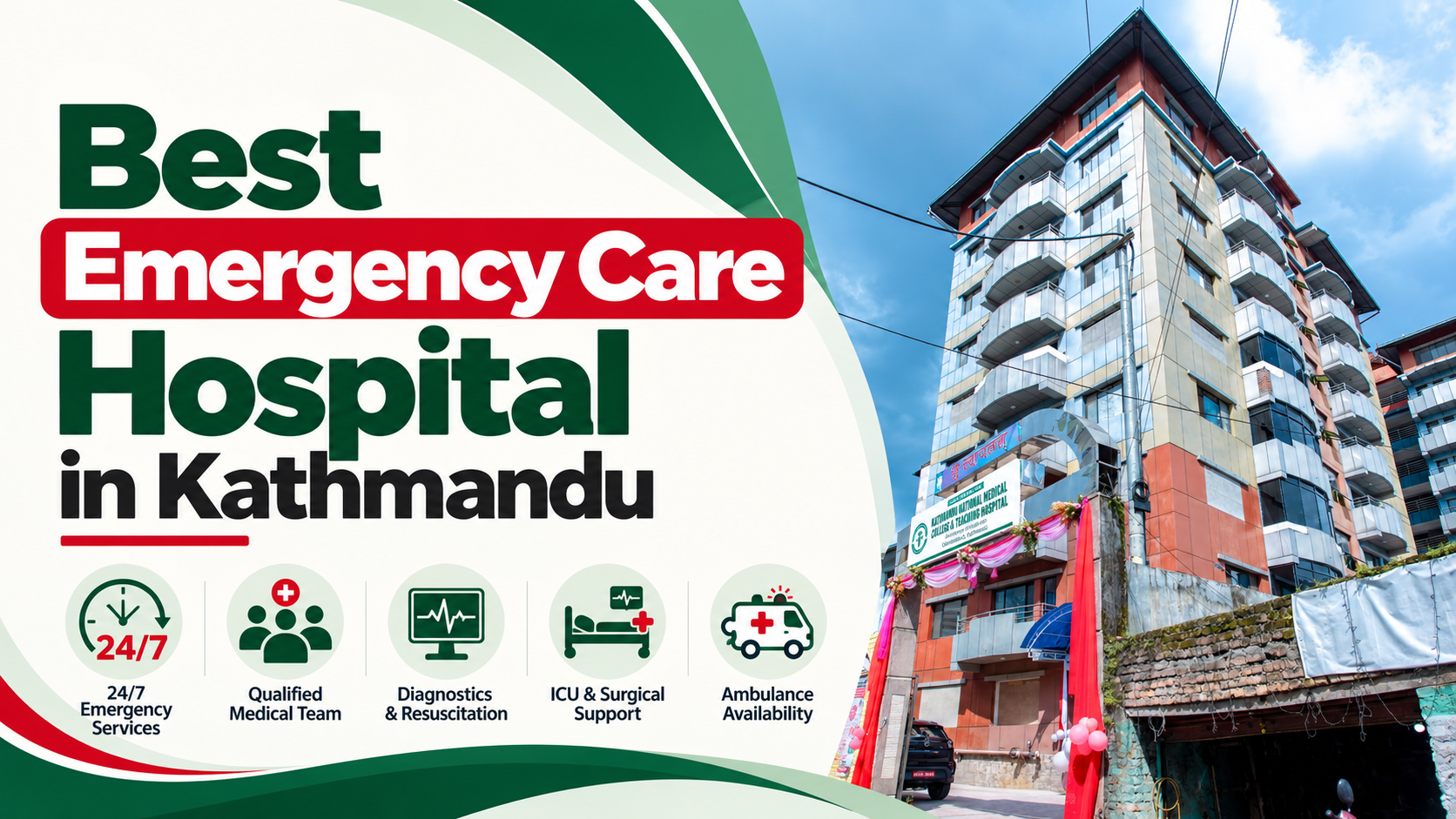
A suitable emergency hospital should be able to assess patients quickly, stabilize life-threatening conditions and provide the investigations and treatment needed for their particular medical problem.
24/7 Emergency Services and Initial Assessment
A 24-hour emergency department accepts patients outside regular outpatient department (OPD) hours, including at night, on weekends and during public holidays.An important feature is triage, the process of assessing patients according to the urgency of their condition. Someone with severe breathing difficulties or signs of a stroke may require attention before a patient with a less urgent injury, even if the latter arrived first.
Qualified Emergency Doctors and Nursing Staff
Emergency clinicians assess symptoms, identify immediate risks and begin treatment or stabilization. Experienced nursing staff, appropriate monitoring equipment and access to specialist advice can also be important.
When evaluating a hospital, check whether emergency medical staff are available around the clock and how patients access surgical, cardiac, neurological or pediatric support when needed.
Emergency Diagnostics and Resuscitation Facilities
Doctors may need investigations to identify the cause of an acute illness or injury. Depending on the situation, these can include blood tests, electrocardiograms (ECGs), X-rays, CT scans or ultrasound examinations.
Resuscitation equipment and monitoring facilities are also important when patients experience cardiac arrest, severe breathing problems or other life-threatening conditions.
ICU, Surgical Support and Referral Arrangements
Some emergencies require intensive monitoring, emergency surgery or specialized treatment. A hospital with an intensive care unit (ICU) may be suitable for certain critically ill patients.
Ambulance Availability and Accessibility
An ambulance can help patients access medical care when travelling independently is unsafe or impractical. Depending on the patient's condition, trained ambulance personnel may also provide appropriate care during transport.
Check the ambulance contact number, service coverage, likely availability and charges. Do not assume an ambulance is free or immediately available simply because a hospital advertises ambulance services.
How to Choose an Emergency Hospital in Kathmandu
Kathmandu road conditions, traffic and the distance between residential areas and hospitals can affect how quickly someone reaches emergency care. Use the following criteria when evaluating your options.
Consider the Distance and Time Needed to Reach Care
In an emergency, the nearest appropriate facility may be a better option than travelling across the city to a hospital described as the best.
For example, someone in Ghattekulo may consider the time needed to reach a nearby emergency department, while someone travelling from another part of Kathmandu should also consider traffic and road access.
For serious or potentially life-threatening symptoms, seek emergency assistance promptly instead of delaying care to compare hospitals online.
Check Whether the Hospital Can Treat the Type of Emergency
Different situations require different capabilities. A road accident may require trauma assessment and surgical support, while a suspected stroke requires urgent evaluation and appropriate brain imaging.
Before choosing a hospital for planned or non-immediate care, check its relevant specialties and treatment facilities. During a time-critical emergency, contact emergency services and follow their guidance rather than delaying transport for a detailed comparison.
Verify Which Services Are Available at Night
A hospital may offer cardiology, orthopaedics or other specialist consultations during scheduled OPD hours. That does not necessarily mean every specialist is physically present throughout the night.
Confirm whether emergency doctors, diagnostic services, critical-care beds and the required specialist support are available when needed.
Ask About Ambulance and Transfer Support
Find out whether the hospital operates its own ambulance service, which areas it covers and how patients can request transport.
If you are searching for a free ambulance service in Kathmandu, confirm whether free transport is currently available for your situation. Eligibility, distance and other conditions can affect access and charges.
Which Emergency Situations Require Different Hospital Capabilities?
The appropriate emergency facility depends partly on the nature and severity of the problem. The following examples explain why specific services matter.
Road Accidents and Serious Injuries
Road accidents can cause fractures, bleeding, head injuries and damage to internal organs. Patients with serious injuries may require rapid assessment, imaging, surgical support and intensive monitoring.
For emergency care after a road accident in Kathmandu, prioritize prompt professional assessment. Suspected neck or spinal injuries require careful handling, so avoid unnecessary movement unless there is an immediate danger at the scene.
Chest Pain and Suspected Cardiac Emergencies
Sudden or persistent chest discomfort, particularly when accompanied by breathlessness, sweating, nausea or pain spreading to the arm or jaw, can indicate a serious heart problem.
These symptoms require urgent medical assessment. An emergency department may use an ECG, blood tests and other investigations to determine the cause.
Suspected Stroke and Other Neurological Emergencies
A stroke may cause sudden facial weakness, weakness in one arm, difficulty speaking, changes in vision or loss of balance. Immediate assessment matters because appropriate treatment can be time-sensitive.
A hospital's diagnostic capabilities and access to neurological or neurosurgical expertise may be relevant. Do not wait for symptoms to disappear before seeking help.
Children's Medical Emergencies
Children may need age-appropriate assessment and treatment for breathing difficulties, severe allergic reactions, seizures, serious injuries or other acute illnesses.
When evaluating emergency care for children, check the availability of pediatric assessment and appropriate support facilities. For a severe or rapidly worsening condition, seek immediate emergency care rather than waiting for a scheduled pediatric appointment.
Severe Breathing Problems, Allergic Reactions and Poisoning
Severe breathlessness, suspected poisoning and serious allergic reactions can become life-threatening. Appropriate emergency support may include airway management, monitoring, resuscitation and condition-specific treatment.
If someone is unconscious, struggling to breathe or experiencing another potentially fatal condition, contact emergency services immediately. Do not try to manage a serious emergency at home while searching for hospital information.
Pregnancy-Related Emergencies
Severe bleeding during pregnancy, seizures, serious abdominal pain or other urgent pregnancy-related symptoms require prompt medical assessment.
Confirm whether a hospital can provide emergency obstetric care, delivery services and appropriate newborn support when relevant. If these services are unavailable, urgent referral or transfer may be needed.
What Happens When You Arrive at an Emergency Department?
Understanding the emergency process can help patients and families know what to expect.
Triage and Initial Assessment
A member of the emergency team evaluates the patient's symptoms, vital signs and immediate risks. Patients with the most urgent conditions are prioritized, so the order of arrival does not necessarily determine who receives treatment first.
Examination, Stabilization and Investigations
The medical team performs an initial examination and decides which tests or immediate interventions are appropriate. Some patients may require resuscitation before further investigations can be completed.
Treatment, Observation or Hospital Admission
After the initial assessment, the patient may receive treatment and go home with appropriate instructions, remain under observation, be admitted to the hospital or require transfer to another facility.
The decision depends on the condition, response to initial treatment and level of care needed.
Why Some Patients May Be Seen Before Others
Emergency departments prioritize clinical urgency. A patient with a life threatening condition may need immediate attention even when several people have been waiting longer.
Waiting times can change with patient numbers, staffing and the severity of cases arriving at the department. No hospital should be assumed to guarantee a particular waiting time for every patient.
Emergency Care at KNMC Hospital, Ghattekulo, Kathmandu
For residents looking for an emergency hospital near Ghattekulo, Kathmandu National Medical College and Teaching Hospital offers a local option for round-the-clock emergency assessment.
The hospital is located at 29 Ghattekulo Marga, Kathmandu, Bagmati Province. Its published emergency service information covers acute illnesses and traumatic injuries, with triage, resuscitation, diagnostic investigations, wound management and short-term observation.
Emergency Department Availability
KNMC Hospital advertises 24/7 emergency care. Its stated service areas include trauma care, cardiac emergencies, stroke management, pediatric emergencies, respiratory emergencies, poisoning and acute pain management.
The appropriate treatment and specialist involvement depend on the patient's clinical needs and the facilities and staff available at the time.
Emergency Assessment, Trauma Care and Resuscitation
Triage helps the team prioritize patients according to clinical urgency. The department also lists resuscitation for cardiac arrest and other critical conditions, along with wound management and an observation unit for short-term monitoring.
Diagnostic Facilities for Emergency Patients
The emergency department lists point-of-care testing, X-rays, CT scans and ultrasound among its diagnostic services, with availability advertised around the clock.
For a specific condition, confirm whether the required investigation and any associated specialist service are available when you contact the hospital.
Ambulance Availability and Emergency Contact Information
KNMC provides ambulance access for patients needing emergency assistance. The hospital's published contact page gives 01-4771556 for ambulance and trauma-response enquiries. The same number appears as the hospital's general contact number.
For readers searching for a free ambulance service in Kathmandu, it is important to verify the current charges and eligibility directly. A report published when the hospital resumed operations in August 2025 described discounts on ambulance, laboratory, ultrasound, X-ray and physiotherapy services; it did not establish that every ambulance journey was free.
Call 01-4771556 to confirm the current ambulance arrangements, service area and applicable charges before relying on free transport.
Access to Critical Care and Further Treatment
The relevant clinical team depends on the patient's emergency. KNMC's published specialist directory includes clinicians in emergency medicine, critical care, cardiology, orthopaedics, pulmonary medicine and neurosurgery.
Relevant clinicians include:
- Dr. Bishwa Nath Ranpal: MDGP, with a focus on general practice and emergency medicine. The current public directory does not provide a verified number of years of experience for him.
- Dr. Ashim Gaudel: Anaesthesiology, perioperative care, pain management and critical care medicine; listed with more than 10 years of experience.
- Dr. Parag Karki: Consultant cardiologist with a background in cardiology and internal medicine; listed with more than 10 years of clinical experience.
- KNMC Specialists, Nepal+1
- Dr. Nilesh Kumar Mishra: Orthopaedics and spine surgery; listed with more than 10 years of experience.
- Dr. Noor Alam Ansari: Pulmonary medicine, critical care and sleep medicine; listed with more than 10 years of experience.
- Dr. Suresh Sapkota: Neurosurgery; listed with more than 13 years of experience.
These specialties are relevant to different medical needs, but their inclusion in the hospital directory does not guarantee that every consultant is physically available in the emergency department at all hours. Confirm current availability and treatment arrangements with the hospital.
For service details, the KNMC Emergency Department, specialist directory and contact page provide relevant information.
What Should You Know Before Reaching an Emergency Hospital?
A little preparation can help the medical team understand the situation, but preparation must never delay emergency care.
What Information Should You Give the Medical Team?
Explain what happened, when the symptoms started and whether they have changed. Share known allergies, existing medical conditions and current medicines, including any medicines taken before arrival.
For suspected stroke or other time-sensitive conditions, note when symptoms were first observed if possible. This information can help clinicians assess the patient.
Which Documents or Reports May Be Helpful?
Previous medical reports, prescriptions, a medication list and identification can be useful. Insurance information may also help with administrative arrangements.
However, do not delay emergency transport to collect paperwork or belongings.
When Should You Contact an Ambulance?
Seek emergency assistance for potentially life-threatening symptoms such as severe breathing difficulty, loss of consciousness, suspected stroke, severe chest pain or serious injuries. These conditions may require urgent professional assessment and transport.
If you contact KNMC for an ambulance, provide the patient's location, the nature of the emergency and a callback number. Follow the dispatcher's instructions and confirm that a vehicle can be sent.
Understanding Emergency Treatment Costs in Kathmandu
Emergency treatment costs depend on the patient's condition, the tests needed, the treatment provided and whether hospital admission or intensive care is required. A single price cannot accurately represent every emergency visit.
What Can Affect the Cost of Emergency Treatment?
Charges may include registration, consultation, laboratory investigations, imaging, medicines, procedures, ambulance transport and inpatient care. Patients needing surgery or intensive care may incur additional costs.
The final amount also depends on the hospital's current fee schedule and any applicable discounts or insurance arrangements.
Frequently Asked Questions About Emergency Hospitals in Kathmandu
What is the best emergency care hospital in Kathmandu?
The most suitable hospital depends on the patient's medical condition, the time needed to reach care and the services available. Compare emergency staffing, diagnostic facilities, specialist access and critical-care support rather than relying on a general ranking.
Does KNMC Hospital provide 24/7 emergency care?
Yes, KNMC Hospital provides round-the-clock emergency services for acute illnesses and traumatic injuries, including triage, resuscitation, emergency diagnostics, wound management and observation.
Does KNMC Hospital provide a free ambulance service?
Yes, KNMC Hospital Provides ambulance services and publishes 01-4771556 for ambulance and trauma-response enquiries.Contact the hospital to confirm current charges, eligibility and coverage.
What should I look for in a 24-hour emergency hospital?
Check whether the hospital has emergency medical staff, triage, resuscitation equipment, appropriate diagnostic facilities, critical-care support and access to the specialists required for the patient's condition. Ambulance access and the hospital's location also matter.
How much does emergency treatment cost in Kathmandu?
There is no single emergency treatment price. Costs depend on the patient condition, investigations, medicines, procedures and admission requirements. Contact the hospital for current fees and ask which services are billed separately when the situation allows.
Find Emergency Care at KNMC Hospital
Choosing an emergency hospital in Kathmandu means considering the patient's condition, the time needed to reach care and the facilities required for treatment. Round-the-clock availability is important, but so are prompt assessment, diagnostic capabilities, specialist support, ambulance arrangements and clear information about costs.
KNMC Hospital in Ghattekulo advertises 24/7 emergency services, including triage, resuscitation, diagnostic investigations, wound management and observation. For emergency contact and ambulance enquiries, call 01-4771556 or visit the KNMC Emergency Department.
If someone is experiencing a potentially life-threatening emergency, seek professional assistance immediately rather than delaying care to compare hospitals or read additional information.
Book a consultation with Doctors at KNMC Hospital
01-4771556 | Book Appointment | Contact Us
Follow KNMC Hospital on Social Media:
Facebook | Instagram | LinkedIn | TikTok