Medically reviewed by KNMC Hospital Last updated: September 2026
What Are Piles?
Piles, or hemorrhoids, are the result of swollen veins in the lower anus and rectum. They can cause tissue growths in and around the anus and can lead to significant discomfort. These growths can vary in size and location.
Why Early Detection Matters
Prevents progression: Catching piles early helps prevent them from advancing to more severe stages.
Reduces complication risk: Earlier treatment lowers the chance of complications such as thrombosis, a painful clot within a pile, or infection.
Supports non-surgical treatment: Many early-stage piles can be managed with lifestyle changes and medication rather than surgery.
Early Signs of Piles You Should Not Ignore
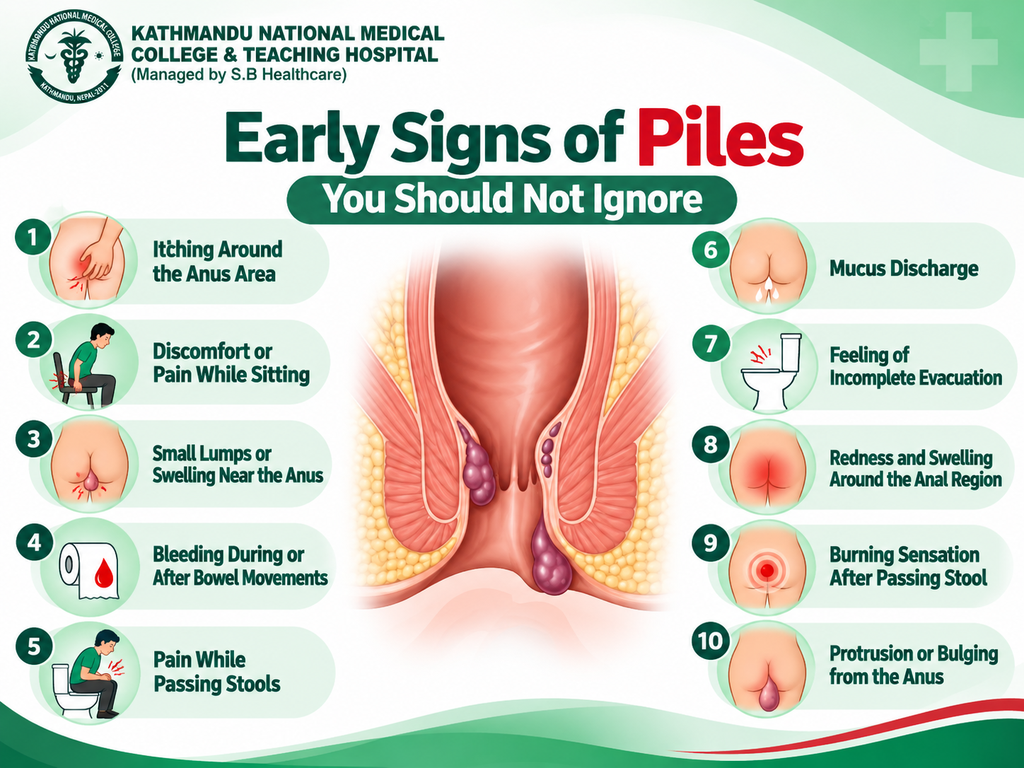
Itching Around the Anus Area
Mild itching is often one of the earliest and easiest signs to dismiss. It usually results from irritation of the swollen tissue or from mild mucus discharge affecting the skin nearby.
Discomfort or Pain While Sitting
Swollen veins can be compressed during sitting, especially on hard surfaces or over long periods. This discomfort is easy to attribute to something else, which is why it often goes unaddressed.
Small Lumps or Swelling Near the Anus
External piles can often be felt as a small, soft lump around the anal opening. Many people first notice this while cleaning the area after a bowel movement.
Bleeding During or After Bowel Movements
Bright red, painless bleeding is one of the most recognized early signs of piles. It is often first noticed on toilet paper or in the toilet bowl.
Pain While Passing Stools
Some people experience sharp or dull pain during a bowel movement, particularly if the piles are irritated or a fissure has developed alongside them.
Mucus Discharge
Internal piles can occasionally produce mucus, which may cause mild dampness or irritation around the anus.
Feeling of Incomplete Evacuation
Swelling in the rectal area can create a sensation that the bowel has not fully emptied, even after a normal bowel movement.
Redness and Swelling Around the Anal Region
Visible changes in the skin, including redness or swelling, can develop as piles enlarge or become irritated.
Burning Sensation After Passing Stool
A lingering burning feeling after a bowel movement is common when the surrounding tissue is inflamed.
Protrusion or Bulging from the Anus
In more advanced cases, internal piles may protrude during or after a bowel movement. This may resolve on its own or require gentle repositioning, and it is a sign that a medical evaluation should not be delayed.
Top Doctor for Piles Treatment
At KNMC Hospital, Kathmandu, piles are evaluated and treated by the General Surgery department. Each patient is assessed individually, and treatment is recommended based on the stage and severity of the condition rather than a one-size-fits-all approach.
Dr Padam Prasad Bhusal, General Surgery, KNMC, consults on piles, fissures, fistula, and a broad range of general surgical conditions.
Risk Factors for Developing Piles
1) Chronic constipation or diarrhoea: Both place repeated strain on the veins in the rectal area.
2) Straining during bowel movements: This directly increases pressure on the same vein structures.
3) A sedentary lifestyle: Long periods without movement contribute to pressure buildup in the pelvic region.
4) A low-fibre diet: Diets low in fibre lead to harder stools, which increases the need to strain.
What Should You Do If You Notice These Signs?
1) Increase fiber intake: Fruits, vegetables, and whole grains help keep stools soft and easier to pass.
2) Drink plenty of water: Adequate hydration supports softer stools and reduces straining.
3) Avoid prolonged sitting or straining: Both add sustained pressure to the affected veins.
4) Maintain regular bowel habits: Going when you feel the urge, rather than delaying, reduces unnecessary strain.
When Should You Consult Your Doctor?
Persistent bleeding: Bleeding that continues over several bowel movements should be checked, even if it seems minor.
Severe pain or swelling: This can indicate a complication that needs prompt attention.
Symptoms not improving with home remedies: If dietary and lifestyle changes haven't helped within a couple of weeks, it's time for an evaluation.
Recurrent episodes: Piles that keep coming back are worth discussing with a surgeon rather than managing repeatedly at home.
Final Thoughts
Early signs of piles are often mild but should not be ignored. Timely intervention can prevent the condition from worsening and reduce the need for surgical treatment.
If you notice any of these symptoms, consulting a healthcare professional ensures accurate diagnosis and appropriate care for long-term relief. The General Surgery team at KNMC Hospital, Kathmandu, provides evaluation and treatment for piles, from early-stage management through to surgical options such as laser treatment where appropriate. Book an appointment or contact us at 01-4771556 to speak with our team.
Frequently Asked Questions
Can piles go away on their own?
Mild, early-stage piles sometimes improve with dietary and lifestyle changes alone. Larger or more persistent piles usually need medical evaluation and treatment to resolve fully.
Is bleeding during bowel movements always due to piles?
Not always. While piles are a common cause of painless rectal bleeding, fissures and other conditions can cause similar symptoms, so a proper examination is needed to confirm the cause.
How can piles be prevented?
A high-fibre diet, adequate water intake, regular physical activity, and avoiding prolonged straining or sitting all help reduce the risk of developing piles.
When should I see a doctor for piles?
You should see a doctor if you notice persistent bleeding, ongoing pain or swelling, symptoms that don't improve with home care, or piles that keep recurring.
Book a consultation with KNMC's General Surgery team:
01-4771556 | Book Appointment | Contact Us
Follow KNMC: Facebook | Instagram | LinkedIn | TikTok