Medically reviewed by KNMC Hospital Last updated: October 2026
If you have knee pain, it can be hard to climb stairs. Walking can be affected by a hip problem. A fracture or condition of the spine may interfere with work, exercise and regular daily activities. If these problems persist, then visiting the right orthopaedic specialist can help you know what really is the cause of it and what treatment options are there.
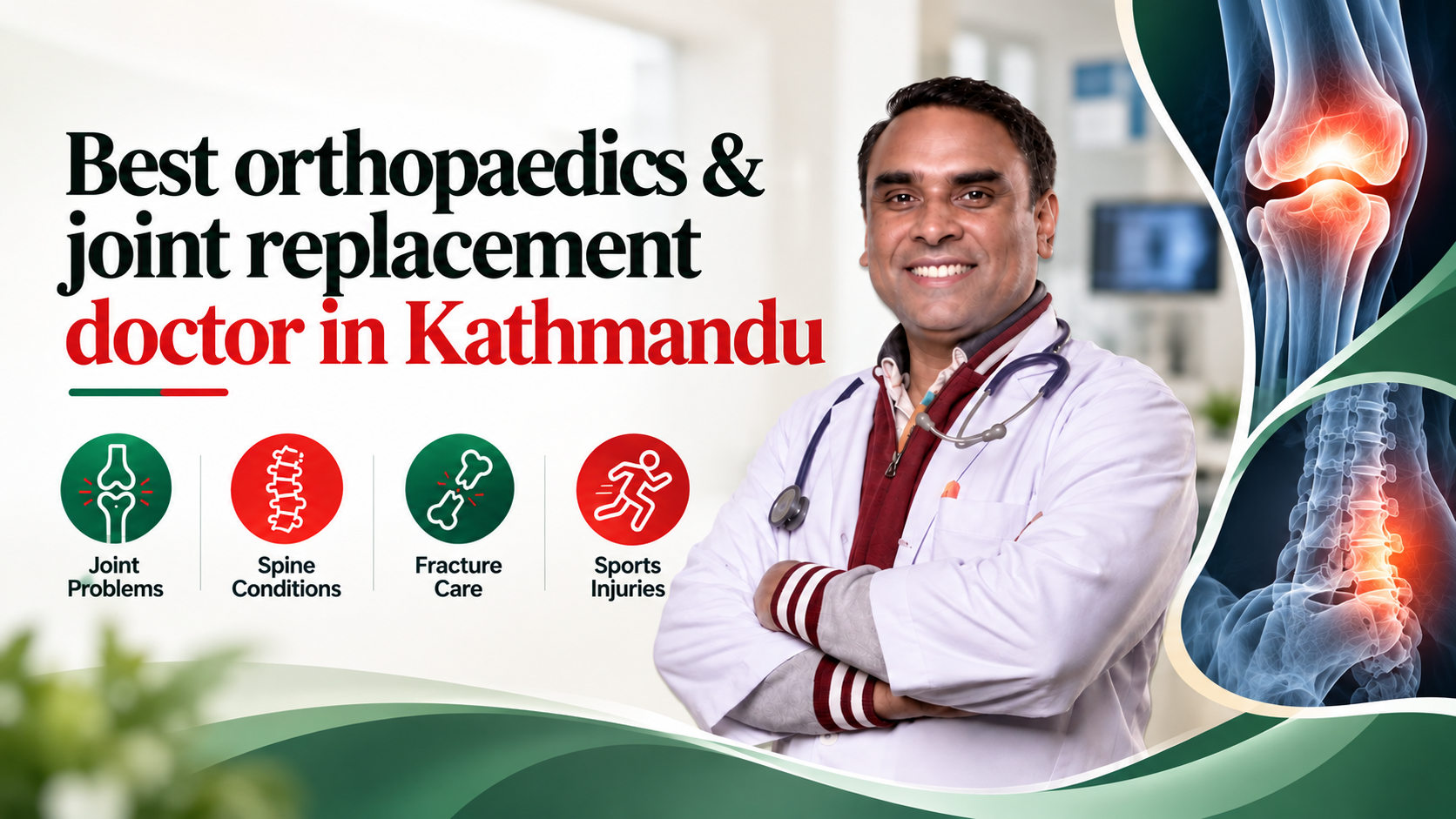
The selection of the Best Orthopaedic Doctor in Kathmandu must be based on relevant qualifications, clinical focus, experience, hospital support and the type of treatment required. This guide is about Dr Nilesh Kumar Mishra, common orthopaedic conditions and procedures, how these problems are diagnosed, and what patients should expect from an orthopaedic specialist.
What does 'orthopaedics' mean?
Orthopaedics is the treatment of injuries and diseases of the bones, joints, muscles, ligaments, tendons and spine. These problems can be anything from sudden injuries such as fractures and sprains, to longer-term conditions such as osteoarthritis and back pain. According to the World Health Organisation, musculoskeletal conditions may lead to pain, reduced mobility and limitations in daily activities
Many people believe that if they go to an orthopaedic doctor, they will need surgery. It is not. Treatment depends on the condition but can include exercise, physiotherapy, medicines, changes in activity, braces or other non-surgical options.
Why Choosing the Right Orthopedic Doctor Matters in Kathmandu?
Knee pain, hip pain or back pain is not a diagnosis by itself. The same symptom can come from different problems, and the treatment can be very different.
Take knee pain as an example. Osteoarthritis can cause pain, stiffness and reduced movement, while an injury may involve a ligament, cartilage or another structure. The WHO notes that osteoarthritis commonly affects the knees and hips and that treatment should be tailored to the person's symptoms and functional needs.
When choosing an Orthopedic Doctor in Kathmandu, patients should look at more than online ratings. Relevant specialist training, experience with the type of condition being treated, the hospital's facilities and the availability of rehabilitation can all matter.
It is also worth paying attention to communication. A useful consultation should leave you understanding what may be causing the problem, whether surgery is necessary and what the next step looks like.
Dr Nilesh Kumar Mishra Qualifications and Medical Training
Dr Nilesh Kumar Mishra is an Orthopaedic and Spine Surgeon at Kathmandu National Medical College & Teaching Hospital (KNMC). He has 10+ years of clinical experience in Orthopaedic and Spine care and works as a Consultant in the Orthopaedics Department.
His medical training includes an M.B.B.S. from Zhengzhou University Medical College, China, completed in 2005, followed by an M.S. in Orthopaedics & Spine Surgery from King Edward Medical University / Mayo Hospital, Lahore, completed in 2017. His Nepal Medical Council registration number is 6250.
For patients in Kathmandu and across Nepal, communication can also be important during diagnosis and follow-up. Dr Mishra speaks Nepali, English and Hindi. Dr Nilesh Kumar Mishra.
Why to Choose Dr Nilesh Kumar Mishra for orthopaedics & joint replacement care
Choosing a Joint Replacement Surgeon is a decision that should be based on training, clinical focus and the patient's own condition.
Specialization: Dr Mishra's professional focus is Orthopedics and Spine Surgery. At the hospital level, the KNMC Orthopaedics Department provides care for joint replacement, fracture treatment, arthroscopy, spine surgery and sports injuries.
Experience: Dr Mishra has 10+ years of clinical experience in Orthopaedic and Spine care.
Achievements: His postgraduate training includes an M.S. in Orthopaedics & Spine Surgery, providing specialist education in orthopaedic and spine surgical care.
Approach: Good orthopedic treatment is not one-size-fits-all. Dr Mishra's professional background describes patient-centered treatment strategies built around individual needs and long-term recovery goals.
Dedication: For orthopedic care, that means looking at the person's symptoms, condition and recovery goals before deciding what treatment is appropriate.
Why Choose an Orthopedic Specialist?
An orthopedic specialist helps assess problems involving the musculoskeletal system and decide what type of treatment is appropriate. The answer can be very different from one patient to another, even when two people have similar symptoms.
Knee Replacement Surgery
A knee replacement replaces damaged parts of the knee joint with artificial components. It is generally considered for people with significant knee damage and pain when other treatment has not provided enough relief.
Hip Replacement Surgery
Hip replacement involves replacing damaged parts of the hip joint with artificial components. It can be considered when hip damage causes substantial pain and difficulty with normal activities.
Arthroscopy
Arthroscopy is a minimally invasive procedure that uses a small camera and specialized instruments to examine or treat selected problems inside a joint.
It is useful for certain joint conditions, but it is not automatically the right choice for every person with joint pain. The diagnosis and condition of the joint determine whether arthroscopy is appropriate.
Spine Surgery
Spine surgery includes different procedures used for particular spinal conditions when an operation is clinically appropriate. Not every person with back or spine pain needs surgery.
A proper assessment helps determine whether the symptoms can be managed with non-surgical treatment, rehabilitation or another approach before surgery is considered.
Fracture Treatment
Fracture treatment depends on the location and type of fracture, how displaced or unstable it is, and the person's overall condition.
Some fractures can be treated with immobilisation, while others require the bones to be realigned or surgically fixed. The goal is to restore stability and allow the bone to heal properly.
Common Orthopedic Conditions Treated
Orthopaedic problems can affect people after an injury, because of joint degeneration, through sports activity or as part of another medical condition.
Common orthopedic conditions include:
- Knee arthritis and persistent joint pain
- Hip problems
- Sports injuries
- Fractures and trauma
- Spine and back conditions
- Ligament and meniscus injuries
The important thing is to identify the cause. A painful knee, for example, does not automatically mean that the joint needs to be replaced.
Get Expert Orthopedic Care in Kathmandu
Experiencing ongoing joint, bone or spine problems? Connect with Dr Nilesh Kumar Mishra at KNMC to discuss your symptoms and explore suitable treatment options.
How Are Orthopedic Conditions Diagnosed?
An orthopedic assessment generally starts with a conversation about your symptoms and medical history, followed by a physical examination. The doctor may then decide that imaging or another investigation is needed.
X-rays are commonly useful for looking at bones and joint changes, while MRI can provide information about soft tissues and structures such as ligaments and cartilage. The right test depends on what the doctor is trying to find.
That is why a scan should not be considered in isolation. Symptoms, examination findings and medical history all contribute to the treatment decision.
Common Orthopedic Procedures
Orthopaedic procedures vary according to the condition being treated. Common examples include:
- Knee and hip joint replacement
- Arthroscopy
- Fracture fixation
- Spine procedures
- Sports injury surgery
Whether any of these procedures is appropriate depends on the patient's individual diagnosis and clinical assessment.
How to choose a good Orthopedic doctor in Kathmandu
Start with the doctor's qualifications and the type of orthopedic problem they focus on. A patient looking for a Knee Replacement Surgeon, for instance, may want to understand the doctor's orthopedic training and the joint-replacement services available through the hospital.
The hospital itself matters too. Depending on the treatment, a patient may need imaging, an operating theatre, emergency support or rehabilitation. KNMC lists digital X-ray, operating theatres, rehabilitation facilities and arthroscopy equipment within its Orthopaedics Department. KNMC Orthopaedics: Facilities
A consultation should also be a chance to ask questions. You can ask what is causing the problem, whether surgery is necessary, what alternatives exist and what recovery is likely to involve.
Reviews can be useful for understanding general patient experiences, but they should not replace checking medical qualifications and the doctor's suitability for the condition being treated.
How to Book an Appointment With Dr. Nilesh Kumar Mishra
Dr Mishra's current KNMC profile provides a live appointment system and lists Sunday–Friday as his OPD schedule. It also gives the direct OPD hospital number, 01-4771556. Dr Nilesh Kumar Mishra — OPD and Booking
Patients coming for a consultation can bring previous X-rays, MRI reports, prescriptions and records of earlier treatment. Having this information available can make it easier to explain how the problem has developed and what treatment has already been tried.
For people who also need general preventive screening, KNMC maintains a separate health-checkup package page with its current packages and inclusions. These packages are separate from an orthopedic consultation and should not be treated as a replacement for evaluation of a specific bone or joint problem.
Why Choose KNMC Hospitals for Orthopedics Care in Kathmandu?
KNMC's Orthopaedics Department provides care for problems involving the bones, joints, muscles, ligaments and spine. The department includes several areas of orthopedic practice, including trauma surgery, joint replacement, spine surgery, sports medicine, pediatric orthopaedics, hand surgery and arthroscopy.
Experienced orthopedics specialists:
The department brings together orthopedic specialists across several areas, allowing treatment to be matched to different musculoskeletal conditions.
Advanced surgical technology:
The department lists digital X-ray, operating theatres and arthroscopy equipment as part of its orthopedic facilities.
Minimally invasive expertise:
Arthroscopy is provided for selected joint conditions where a minimally invasive procedure is appropriate.
Personalised treatment plans:
The right treatment depends on the diagnosis, severity of symptoms, general health and the patient's functional needs.
Multidisciplinary care:
Orthopedic treatment can involve the surgeon, diagnostic imaging team, physiotherapy and other hospital services depending on the condition.
Emergency support:
KNMC's current hospital information provides 24/7 emergency care, while its Orthopaedics Department includes fracture and trauma management.
Rehabilitation-focused recovery:
Recovery does not end when surgery is finished. Physiotherapy and gradual return to movement are important after many orthopedic procedures.
FAQs
Q1: How do I know if I need knee replacement surgery?
Knee replacement is generally considered when knee damage causes significant pain and difficulty with movement or daily activities and other treatment has not provided enough relief. NHS: Knee Replacement
Q2: Can sports injuries be treated without surgery?
Yes. The treatment depends on the injury. Some sports injuries can be managed with rest or activity modification, physiotherapy and rehabilitation, while more significant structural injuries may require surgery.
Q3: How can I prevent bone fractures?
Keeping muscles strong, maintaining balance and staying physically active can help reduce the risk of falls and some fractures. Bone health also becomes more important with age. After a significant injury, seek medical attention when there is severe pain, deformity or difficulty using the affected limb.
Q4: When should I see an orthopedic doctor for knee pain?
An orthopedic assessment is worth considering when knee pain persists, keeps returning, causes swelling or stiffness, limits movement or starts interfering with everyday activities. Persistent musculoskeletal problems should not simply be ignored.
Q5: Can knee or joint problems be treated without surgery?
Often, yes. Treatment depends on the cause and severity. It can include exercise, physiotherapy, medicines, activity changes, braces and other approaches. Surgery may be considered when damage is severe or other approaches are not enough.
Q6: Does Dr. Nilesh Kumar Mishra treat spine problems?
Yes. Dr Nilesh Kumar Mishra is an Orthopaedic and Spine Surgeon, and his professional focus is Orthopedics and Spine Surgery.
Conclusion
Choosing the Best Orthopedic Doctor in Kathmandu is not simply about finding a name at the top of a search result. It means finding an appropriately qualified specialist, understanding the condition and knowing what treatment options are available.
Dr Nilesh Kumar Mishra is an Orthopaedic and Spine Surgeon at KNMC. His official profile records 10+ years of clinical experience, an M.B.B.S, an M.S. in Orthopaedics & Spine Surgery, NMC registration number 6250, and Orthopedics and Spine Surgery as his area of focus.
For knee pain, hip problems, fractures, sports injuries or spine-related symptoms, a proper specialist assessment is the sensible place to start. Bring your previous medical records to the appointment, explain what has been happening and ask questions about both surgical and non-surgical options before making a decision.
Department: Orthopaedics
Book a consultation with Dr Nilesh Kumar Mishra at KNMC Hospital
01-4771556 | Book Appointment | Contact Us
Follow KNMC Hospital on Social Media:
Facebook | Instagram | LinkedIn | TikTok